
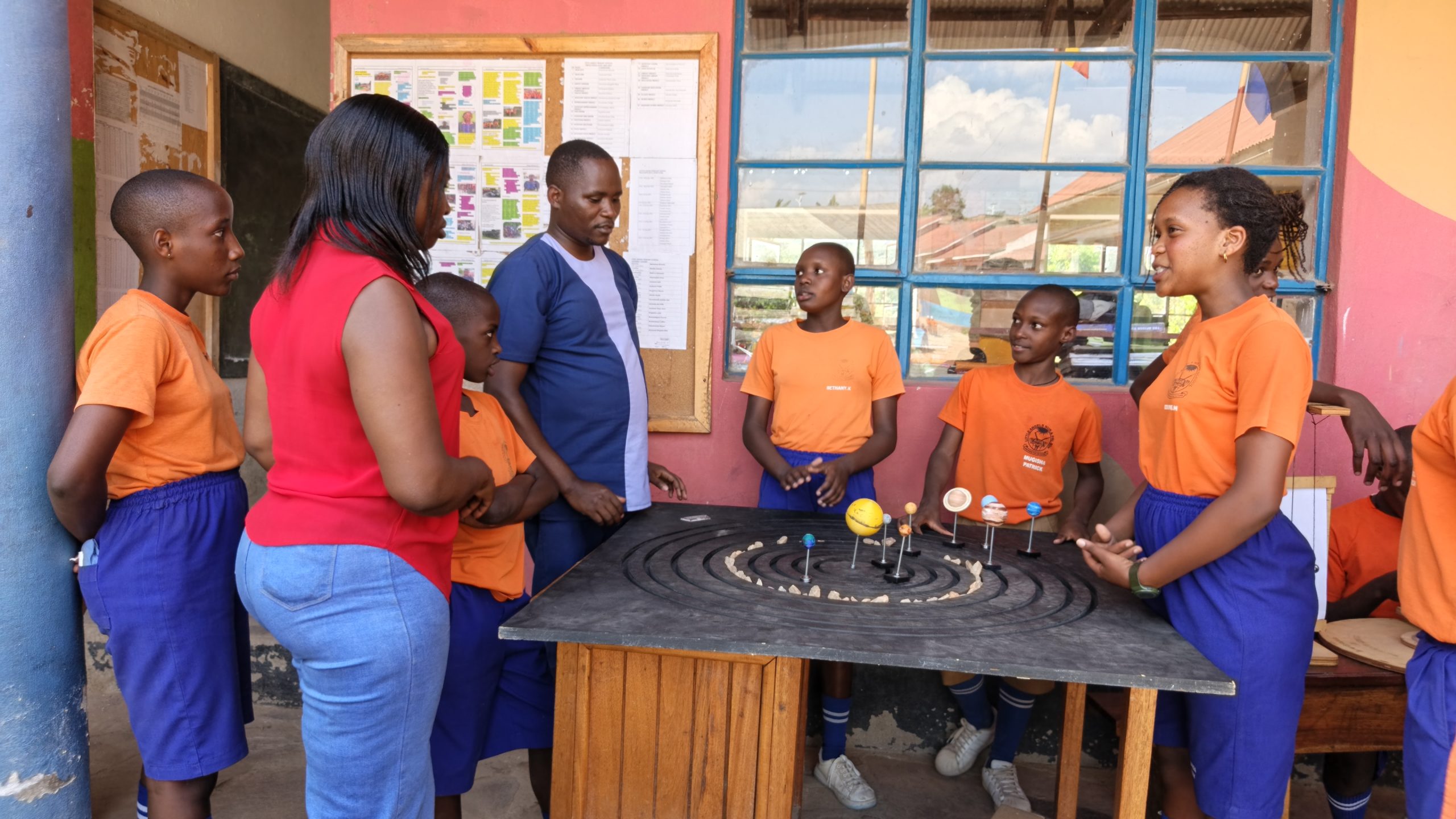

Science is an important part of education because it helps learners understand the world around them through observation, experimentation, discovery, and practical activities. At Little Angels Primary School, learners were given an opportunity to demonstrate and expand their scientific knowledge through an exciting Science Exhibition prepared by Mr. Byaruhanga Rodgers, Head of the Science Department.
The exhibition brought together learners, teachers, parents, and guardians who gathered to witness the creativity, confidence, and practical knowledge of the children. The event was designed to show that science is not only a subject taught in the classroom but also a powerful tool that enables learners to understand and solve real-life challenges.
The Importance of Science Exhibition in Primary Schools
While addressing the learners, Mr. Byaruhanga Rodgers, Head of the Science Department, explained the importance of organizing science exhibitions in primary schools, particularly at Little Angels Primary School, Ntungamo. He emphasized that science exhibitions give learners an opportunity to move beyond theoretical learning and apply the knowledge they acquire in class to practical situations.
He explained that through science exhibitions, learners develop curiosity, creativity, critical thinking, problem-solving skills, confidence, teamwork, communication skills, and a spirit of innovation. Such activities also encourage children to ask questions, make observations, conduct experiments, and discover how different things work.
The children became very excited when the Head of Department began talking about the Science Exhibition. Their enthusiasm increased as they moved from one exhibition point to another, observing the different projects and listening to explanations from their fellow learners and teachers.
Exploring the Solar Eclipse
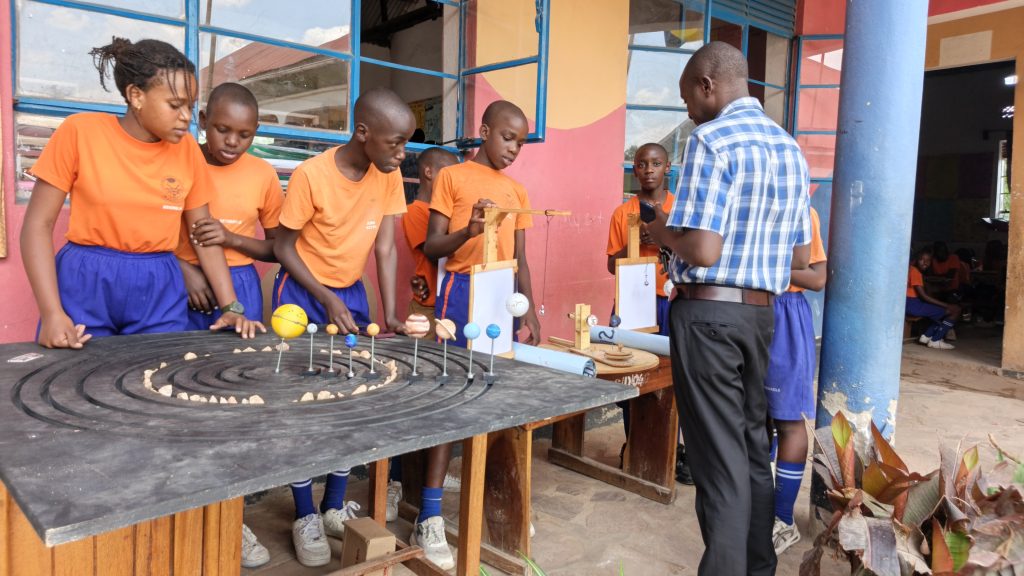
One of the interesting topics presented during the exhibition was the solar eclipse. Learners were introduced to the phenomenon that occurs when the Moon moves between the Earth and the Sun, blocking some or all of the Sun’s light from reaching parts of the Earth.
The exhibition helped learners understand how the Sun, Moon, and Earth are positioned during a solar eclipse. It also demonstrated how science helps us understand natural events that occur in our environment.
Understanding the Human Skeleton
The human skeleton was another important exhibition topic. Learners explored the structure of the human body and learned about the different bones that make up the skeleton.
They discovered that the skeleton provides support and shape to the body, protects important internal organs, and works together with muscles to enable movement. The presentation helped children appreciate the importance of taking care of their bodies and maintaining healthy lifestyles.
Electricity
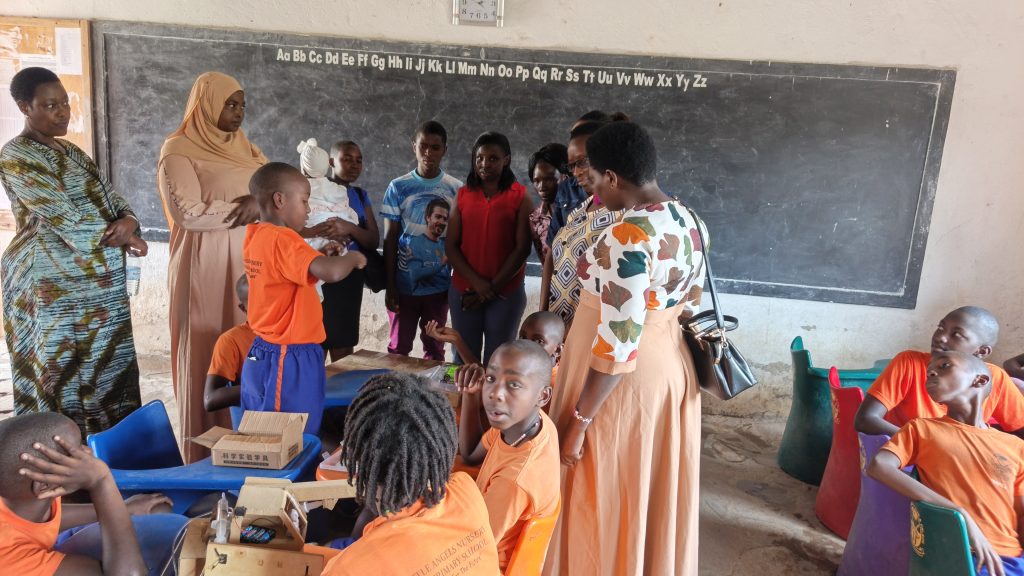
The exhibition also featured a demonstration on electricity, introducing learners to the importance and uses of electrical energy in everyday life. The children learned how electricity is used to power different appliances and equipment at home, school, hospitals, offices, and other places.
The demonstration also reminded learners about the importance of using electricity safely and responsibly.
Electromagnets
Learners were also introduced to electromagnets, which demonstrated the relationship between electricity and magnetism. They learned that an electric current passing through a coil of wire can create a magnetic field.
This exhibition helped children understand how electromagnets are used in different devices and machines in everyday life, making the topic more practical and interesting.
Light Travels in a Straight Line
Another fascinating demonstration focused on the scientific principle that light travels in a straight line. Learners were able to observe how light behaves when it travels from one point to another.
The practical demonstration made it easier for the children to understand concepts such as shadows and how light interacts with different objects. It also showed the importance of conducting experiments when learning science.
Making Alcohol Using the Distillation Method
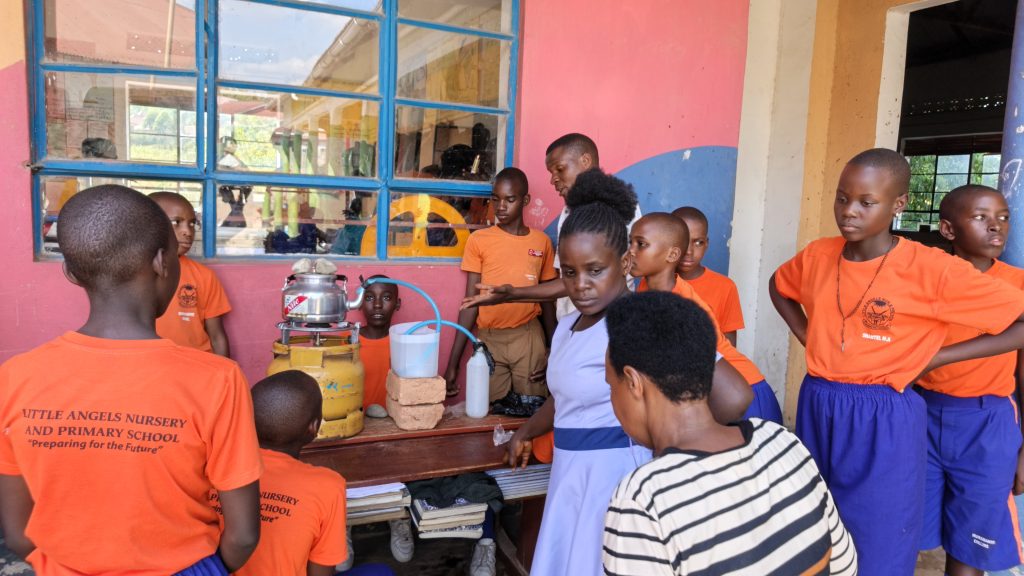
The exhibition also introduced learners to the distillation method, demonstrating how substances in a mixture can be separated based on differences in their boiling points. The process was presented as a scientific experiment to help learners understand the principles of separation of mixtures.
The presentation focused on the scientific process and helped learners appreciate how distillation is applied in different industries and laboratory processes. The activity was conducted as an educational demonstration under proper supervision.
Preparation of Food
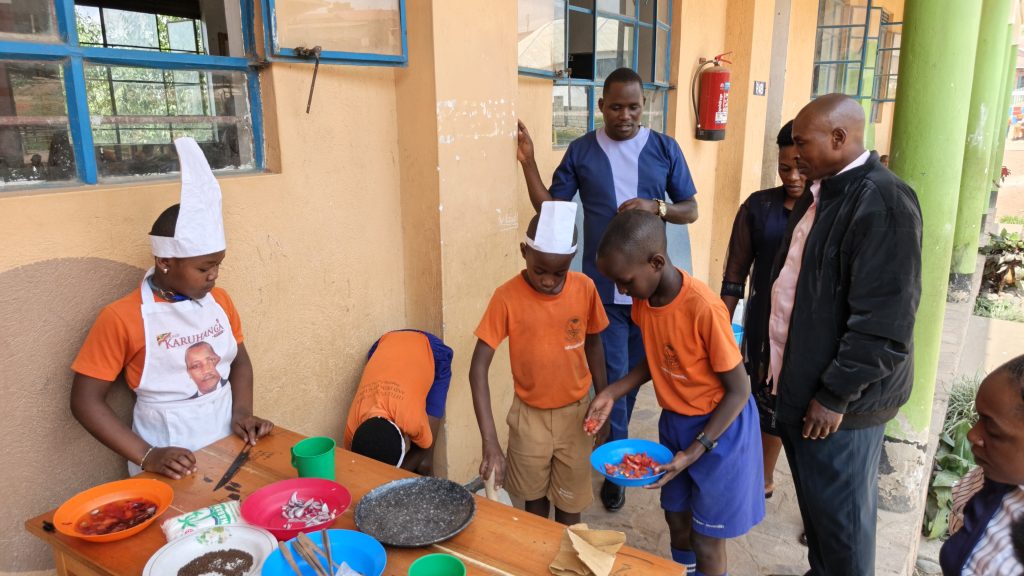
The preparation of food exhibition demonstrated the importance of science in our daily lives. Learners explored how different foods are prepared and the importance of maintaining cleanliness, proper hygiene, and safe food-handling practices.
The activity also helped children understand the importance of balanced nutrition and eating a variety of foods that provide the body with essential nutrients for growth, energy, and good health.
The Digestive System

The digestive system was another important topic presented during the exhibition. Learners explored how food moves through the human body and how the body breaks down food to obtain nutrients.
The exhibition helped learners understand the roles of major organs involved in digestion, including the mouth, stomach, small intestine, and large intestine. It also emphasized the importance of eating healthy foods and maintaining good hygiene for a healthy digestive system.
Rearing Rabbits
The exhibition also covered rabbit rearing, introducing learners to the basics of keeping rabbits as a source of food and income. The children learned about providing rabbits with proper housing, clean water, suitable feeds, and good hygiene.
This topic demonstrated how science can be applied in agriculture and animal husbandry. It also encouraged learners to appreciate the potential of small-scale farming as an activity that can contribute to household income and food security.
Crop Practices

The children also explored different crop practices, learning about activities involved in successful crop production. These included land preparation, planting, weeding, watering, controlling pests and diseases, and harvesting.
The exhibition helped learners understand the importance of agriculture in society and encouraged them to appreciate the role of farmers in providing food and other resources needed in daily life.
Finding the Volume of an Irregular Object Using the Displacement Method
One of the most exciting practical experiments involved finding the volume of an irregular object using the displacement method. Learners were shown how the volume of an object that does not have a regular shape can be determined by observing the amount of water displaced when the object is immersed in water.
This experiment helped children connect classroom theory with practical measurement. It also demonstrated how scientific methods can be used to solve problems and obtain accurate results.
Parents and Guardians Appreciate the Exhibition

The Science Exhibition was not only exciting for the learners but also a memorable experience for the parents and guardians who attended. They were happy and proud to see their children confidently demonstrating scientific concepts and explaining what they had learned.
The parents and guardians appreciated the efforts of the school in providing learners with opportunities to develop practical skills beyond the traditional classroom setting. They were encouraged to see children becoming more confident, creative, curious, and knowledgeable in science.
A Celebration of Learning and Discovery
The Science Exhibition at Little Angels Primary School was a clear demonstration of the school’s commitment to providing learners with quality, practical, and holistic education. Through the guidance of Mr. Byaruhanga Rodgers, Head of the Science Department, the learners were able to showcase how scientific knowledge can be applied to understand the human body, nature, agriculture, energy, food, measurement, and everyday life.
The excitement displayed by the children throughout the exhibition showed that practical learning can make education more enjoyable and meaningful. The event also strengthened the partnership between the school, learners, parents, and guardians in supporting the academic development of children.
The Science Exhibition therefore stands as an important milestone in the academic journey of Little Angels Primary School. It reminded everyone that science is not simply a subject to be studied for examinations; it is a way of understanding the world, solving problems, creating opportunities, and preparing young learners for the future.
As Little Angels Primary School continues with its mission of “Preparing for the Future,” activities such as the Science Exhibition will continue to inspire learners to become confident thinkers, creative innovators, responsible citizens, and future scientists who can use knowledge and skills to transform their communities